
Quranic Learning for kids with ADHD
Teaching the Quran to children is a noble endeavor, every kid want to become a good learner but it is experienced by the tutors that Quranic Learning for Kids Facing ADHD have different learning ability and
some students are very poor in learning and 50% have difficulty in Quranic Learning for Kids Facing ADHD”
The reason behind it is that the kids is unable to pay attention towards his lesson this condition is called attention disorder
Teaching children with attention deficit hyperactivity disorder (ADHD) presents a significant challenge.
ADHD is a neurodevelopmental disorder impacting a child’s capacity to focus, manage impulses, and regulate energy levels.
When it comes to teaching the Quran, conventional approaches might not consistently yield results for children with ADHD.
This article explores the” Online Quranic Learning for Kids Facing ADHD Challenges ” ie attention deficit hyperactivity disorder
We offers insights into adapting teaching methods to make the learning experience more accessible and enjoyable.
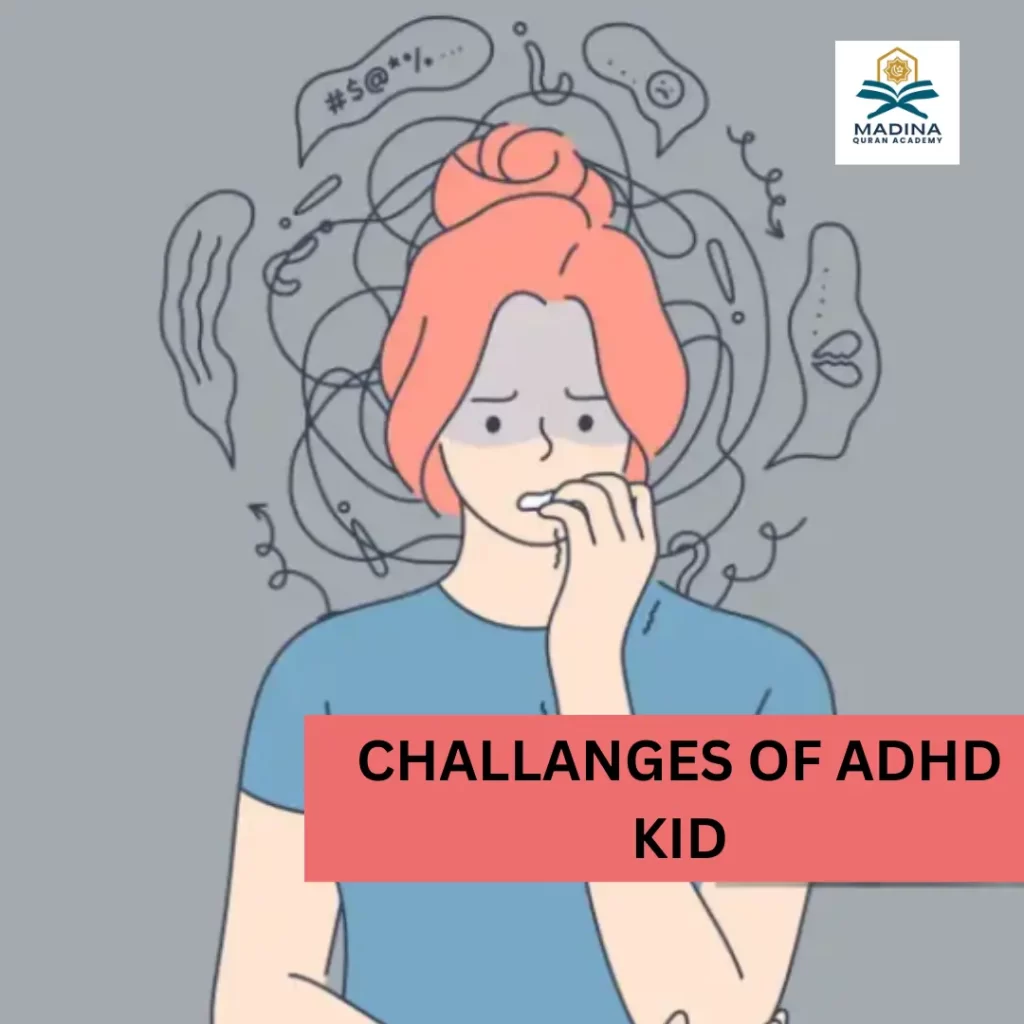
Challenges of Quranic Learning for Kids Facing ADHD
For kids dealing with Attention Deficit Hyperactivity Disorder (ADHD), the learning of Quranic journey can feel like a maze full of twists and turns.
From staying focused to controlling impulses and managing energy levels, ADHD brings its own set of hurdles that affect how they learn Quran
By Knowing these challenges faced by kids with ADHA it will be easier to figure out smart ways to help in learning Quran as well as grow academically and personally.
Difficulty in Maintaining Attention:
Children with ADHD frequently find it challenging to maintain focus for prolonged durations.
Making it challenging for them to engage in lengthy Quranic lessons and Conventional teaching methods,
It involve long periods of reading and memorization, can lead to frustration and disinterest.
Impulsivity and Hyperactivity:
Impulsivity and hyperactivity can hinder children with ADHD from sitting still and staying concentrated.
Conventional classroom environments might not suit their learning preferences, resulting in feelings of restlessness and difficulty focusing
Varied Learning Styles:
Children with attention deficit hyperactivity disorder often demonstrate diverse learning preferences.
An individualized approach is crucial as a one-size-fits-all method may not cater to their specific needs adequately.
Some children may lean towards visual stimuli, while others might excel in hands-on activities.
Challenges with Executive Functioning:
Children with ADHD commonly encounter difficulties in organization, planning, and time management.
These challenges often translate into struggles with assignment tracking, time management, and organization in their Quranic studies.
Issues with Traditional Teaching Methods:
Conventional methods of Quranic education heavily rely on rote memorization, which can pose significant challenges for children with ADHD.
Mosques and religious institutions ought to aim for greater inclusivity by providing support and resources for children with ADHD and their families.
The repetitive nature of memorization may result in boredom and disengagement.
Limited Interactive Learning:
Conventional Quranic education might lack interactive and engaging elements,
essential for captivating the attention of children with ADHD.
Active learning methods might stimulate their minds more effectively than passive ones.
In a time when education increasingly integrates technology,
the traditional approaches to teaching the Quran may overlook the advantages offered by interactive apps and educational tools.
Limited Use of Technology:
While technology has become integral to education, traditional Quranic teaching methods often overlook the benefits of interactive apps, educational games, and multimedia resources.
These resources could greatly enhance the learning experience for children with ADHD.
Smart Teaching Methods for Online Quranic Learning for Kids Facing ADHD:
breakdown lessons:
Breaking down Quranic lessons into shorter, more manageable segments can aid in maintaining attention and interest.
add visuals
Incorporating visual aids such as images, charts, and videos alongside verbal teachings can enhance understanding and retention.
activities:
Integrating hands-on activities related to Quranic stories or role-playing exercises can make the learning process more interactive and immersive.
Educational apps
Leveraging educational apps designed for interactive Quranic learning can make the process enjoyable and engaging for children with ADHD.
flexible learning environment
Creating a flexible online learning environment tailored to the specific needs of children with ADHD is essential.
positive energy
Implementing a system of positive reinforcement to acknowledge progress can boost motivation and confidence.
personalized plans
Developing individualized Quran learning plans that consider each child’s unique strengths and weaknesses is crucial for fostering a supportive environment.
Building Trust and Rapport:
Establishing a strong, trusting relationship with the child is essential for effective teaching.
Simplifying Language:
Adapting the language used to teach the Quran to be more straightforward and concise can aid comprehension.
Interactive Learning:
Utilizing interactive methods such as role-play and hands-on activities helps children with ADHD connect with Quranic teachings.
Promoting Parent Involvement:
Encouraging active involvement of parents in their child’s Quranic education facilitates better understanding of the child’s needs and progress.
that might improve the learning experience for children with attention deficit hyperactivity disorder.
Benefits of online Quranic Learning for Kids Facing ADHD
Spiritual Connection:
Learning the Quran offers a deep spiritual connection. Engaging with their faith enables ADHD kids to foster inner peace and a sense of belonging within their religious community.
Enhanced Concentration:
The structured nature of Quranic learning can help improve an autistic child’s concentration and attention span, skills that can be applied to other areas of their lives.
Emotional Regulation:
Quranic education facilitates children in understanding principles such as patience, compassion, and empathy, fostering emotional regulation and self-control.
Supportive Educational Environments:
Effective Quranic education for autistic children requires collaboration between parents, teachers, and the community.
Teacher Training:
Educators working with autistic children should receive training on autism awareness and strategies for effective teaching.
Parent Involvement:
Encourage parents to be actively involved in their child’s Quranic education. This collaboration helps in understanding the child’s unique needs and progress.
Inclusive Communities:
Mosques and religious institutions should strive to become more inclusive by offering resources and support for autistic children and their families.
Conclusion:
Teaching the Quran to children with ADHD necessitates an individualized and thoughtful approach that acknowledges their unique learning styles and challenges.
By incorporating multisensory elements and embracing a structured yet flexible learning environment, educators and parents can create a positive and enriching experience for these children.
join MADINA QURAN ACADEMY our expert Quran tutors and parents can create a positive and enriching experience for these children.
Recognizing strengths, addressing challenges, and fostering inclusivity are key components of effectively teaching the Quran to children with ADHD.

